Showing posts with label Healthy Hair. Show all posts

Hair Trim

|
I love the feeling of healthy hair (on my head of course)!  There's no way for me to be 100% certain but it looks and feels that way and that's good enough for me.  It feels strong, which my hair never did when relaxed.
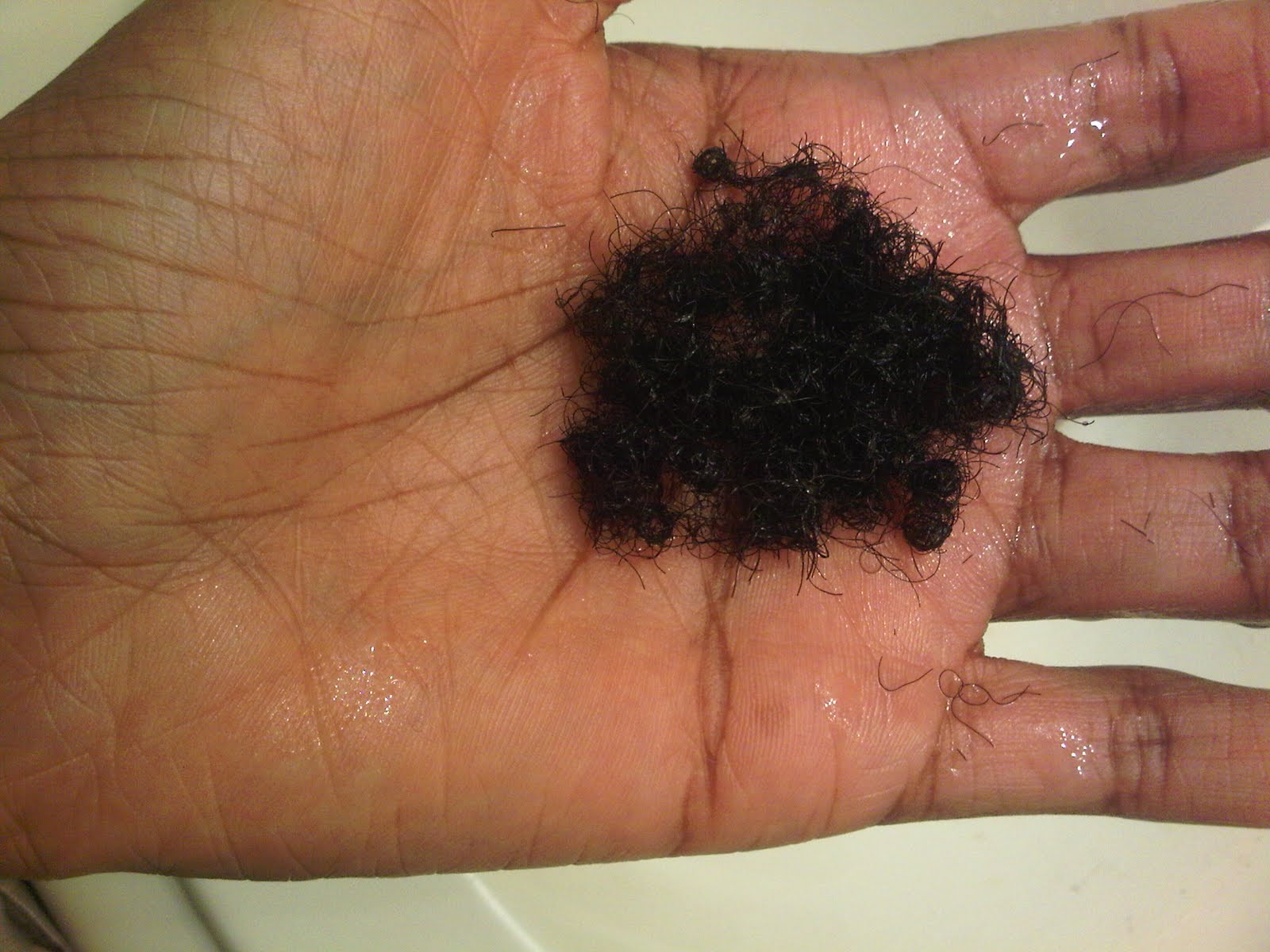
I did a serious trim today, a good 1/4-1/2 inch....


....which is alot considering I only have a few inches in length total.  I  was willing to sacrifice the length knowing when it does grow into a bigger 'fro, it will be a healthy one. There was more cut than this but I lost it to the floor.
After trimming, this was my regimen:
  • Washed with shikakai homemade hair shampoo
  • Deep conditioned with commercial deep conditioner mixed with a generous amount of honey.


Can Heat Permanently Damage Natural Hair?

|


So I was browsing some of my fav natural sites today and came upon a pretty controversial topic in the natural hair community - hair straightening using heat.

You may have already been hearing some Naturals say straightening is bad for your hair. You may have also heard the varying angles and perspectives as to why. There is the social/ideological angle arguing that straightening hair, regardless of how you do it, is an act against the full acceptance of our natural hair and, to some, ourselves as a whole.  I personally don't have much of an opinion about this  idealogical view  other than to say; 'to each his own'.
What struck me had to do with the physical and impactful consequences on hair that has been straightened using heat.

My scouring of the online natural world turned up Naturals, left and right, recounting their horror stories of heat-straightening leaving them with permanent changes in hair texture (loosening of curls that have not reverted back to their natural state), more breakage than normal and generally frizzy, dry hair. And much like the toppling of dominos, these stories spread and has, in turn, lead other Naturals and newbies to swear off straightening for fear it will permanently damage their hair as well. 
Effectively the question that seems to puzzle us all is this: Can heat really permanently damage hair? Some say yes and insist they have firsthand experiences to show, while others, who have been straightening for years emphatically dispute this conclusion, remarking the consistent health of their hair even after years of heat application.
My answer to this question is based on my understanding of the chemistry behind the process of heat-straightening and it is: Yes and no! Frustrating answer, I know, but read on, you might learn something.

My goal is to shed some light on how heat works to straightens hair and thereby (hopefully) dispelling the fear that heat will permanently damage our precious curls.
So here goes (Remember I'm from a health/bio/nutrition background so expect to get the low-down - stay awake. lol):

The Chemistry of Hair
Hair is made up of a protein called alpha-keratin. This unique permutation of the keratin protein is what lends hair its resistance and pliability, both wet and dry. Like all proteins, alpha-keratin is identified by the amino acids (bio-molecules) that make it up and the way those molecules are arranged (called the structure of the protein).

You may or may not remember from your bio class that proteins are formed by the multiple foldings of their polypeptide chains (linked molecules). The multiple foldings of proteins are categorized as the following: Primary, secondary, tertiary and quaternary structures. Think of these structural classifications  as dimensions (though it's really not). Each structure reflects an added level of complexity in the folding of the protein molecule. The primary structure refers to the most basic, but core structure, while the tertiary and quaternary structures refers to the protein's final shape with all its complicated folds.
If you are still with me, I'm impressed. :)

We won't bother at all talking about the primary structure of proteins since it is  not generally affected by heat, pH or cosmetic products.  And we'll barely talk about the secondary structure as it is rarely, if at all, affected by heat. What we will talk about (the structure affected when we apply heat to our hair) is the tertiary structure of the hair protein.  This tertiary structure of the alpha-keratin hair protein is formed almost exclusively with folds held in place by hydrogen bonds.

It is important to note, though, that some hydrogen bonds also form the secondary structure of the hair protein.  This explains why heat may affect the innermost layers of a hair strand. Also, of note, is that the more impact there is to the more innermost layers (structure) of the hair strand the more irreversible the alteration/damage (of the keratin, this is called protein denaturation).

Knowing this, the implications of  too high heat for too long is that it can result in irreversible alteration to the structure of hair....but let's back up.

What Are Hydrogen Bonds?


Hydrogen bonds are responsible for the curl that exists in your hair, and, in the tertiary structure of the keratin protein, it looks something like this.
The H in the pic represents the hydrogen bonds that pull the hair fiber into its naturally curled/coiled state.


How Heat Affects Hair Strand
 When you apply heat to hair, assuming the heat level is not too high, the hydrogen bonds of the tertiary structure are affected first.  The keratin hair protein undergoes what is called denaturation, which simply refers to removal of the protein bonds. In this case, the hydrogen bonds making up the tertiary structure are removed, and thus the curl/coil pattern is loosened or removed.
Once hair is no longer exposed to the heat(hair cools), new hydrogen bonds may form on the hair's new  (straightened) shape.  This is what allows hair to maintain its straight texture for some time. However, hydrogen bonds are attracted to (and thus broken by) the slightly negative charge on the oxygen end of water molecules. This means water will break the hydrogen bonds formed after heat-straightening and explains why hair reverts back to its curly/coily state when wet.

Too Much Heat
 When high heat is applied to the hair strand for excessive periods of time and when hair is not allowed to 'normalize' after heat processing, the damage may become irreversible.  The general takeaway is that heat does not permanently damage hair.  But this statement assumes that hair is not subject to excessive heat  (as in enough to fry the hair) and not for more than a few seconds at a time.  Under normal heat conditions, the hydrogen bonds will reform when heat is removed and the hair will revert to its natural shape over time (and with water).
Too much heat damages hair by not only removing hydrogen bonds at the tertiary level but by removing the hydrogen bonds that make up the more inner  (secondary) structures of the hair protein.  The removal of a large number of bonds makes it difficult for the keratin protein to revert back to its natural shape.  And because the function/characteristics of a protein is tied to its shape, the characteristics inherent to the keratin hair protein are lost. For hair, this means loss of elasticity/pliability, loosened curl patterns, and less resistance to breakage.

Heat Control
If you do want to use heat to straighten your hair, apply these measures:
  • Choose the lowest setting that will straighten your hair. If the medium setting gives you results, don't switch to the high setting. The hair will either straighten or it won't. Higher settings just risks breaking more bonds in your hair, and risking irreversible effects.
  • Use a heat protectant product. These products are meant to offset the effects of heat on your hair by offering an added layer of protection. They should lessen the amount of heat that goes into the hair strand.
  • Be gentle with hair. Hair altered in any way is weaker than in its original state. Hair that has been straightened has had an extra layer of protection (the pliability of hydrogen bonds) removed and thus is inherently more brittle and less resistant to breakage. Be gentle during and after straightening.

'Normalize' Hair Between Straightening
 Healthy hair forms optimal levels of hydrogen and salt bonds.  Hydrogen bonds are affected by oxygen  (think water), nitrogen, and other highly electronegative molecules. This means that exposure to anything largely made up of these will reduce optimal hydrogen bonding in your hair.
Salt bonds are affected (including broken) by pH imbalances.  The less of these salt and hydrogen bonds making up your hair strand, the more susceptible your hair is to the damaging effects of heat when you do apply heat.  To return your hair to normal, between straightenings, treat your hair to deep treatments  (protein or moisturizing depending on your hair needs), and maintain proper moisture. Also keep handling of hair to a minimum as bonds, specifically salt bonds, can be broken simply by manipulating hair.

This post was about informing you so you can be confident that you are making good decisions for your hair while still having the freedom to just have fun with it. Hope this help shed some light on this much-debated topic.
For those of you Natural researchers still curious and want to know more, check out these sites:
http://www.austincc.edu/~emeyerth/tertiary.htm
http://www.keratin.com/aa/aa012.shtml
http://public.fotki.com/virtuousjewel/the-disturbing-trut/

Ready...Set...Big Chop! (Transitioners Read Up) An All-Inclusive Guide to Preparing For the Big Chop

|
I am super-exhausted from a weekend away from home but I wanted to post some information right away for those transitioners about to start their natural hair journey.
At least for me, a large part of lessening my nervousness about doing the 'big chop' was being prepared (especially if you are only a few months into transitioning and will have only  a few inches of new growth when you big chop).
When I big chopped I didn't have anyone who broke it down for me the way I'm about to break it down for you.  I had to trial and error (and waste some money buying products I didn't really need) to figure out what I really needed for my hair.
Now I'm not going to be product-specific because everyone has their preference of products and the products you use will often boil down to your hair type and cost.  Some are willing to spend more than others. I am also not going to tell you that you have to get all-natural or organic products.  I will only give you a list of the ingredients that should send up a red flag to you if you find them in the products and that should indicate that this product is not the best for you.  I encourage all my other current naturals, veterans and newbies who may have already figured out a thing or two to chime in with comments so we can help our soon-to-be naturals get off to a good start. Here goes:

Key things to know before you start this natural journey and to keep in mind throughout your natural journey.  Never forget them and you are not likely to fall off the bandwagon:
  • Natural black (kinky-curly) hair, needs lots of moisture
  • Moisture is water; moisture is not oil
  • Natural black (kinky-curly) hair needs moisture all the time (I will explain how to achieve this so you are not constantly dousing your head with water).
  • 'Moisturizers' as in oils, butters, or creams (emulsified mixes of  oil and water) act on hair as sealants
  • Not all oils are created equal.
  • The type of oils you use depends on what you want your hair to look and feel like, and therefore depends on your hair type. I don't use a typing system so when I say hair type, I simply mean, the unique characteristics of your hair, (i.e very kinky and coarse, loosely curled and silky, thick, thin, etc.)
  • How much growth you retain will depend on two things only, aside from genetics,: The health of your scalp and your ability to retain the current hair you have - which leads me to the next point:
  • The health of the hair that grows out of your scalp will depend on two things: The health of your scalp and your general health. If your scalp shows signs of ill-health (flaky, dry, excessively oily) this will affect the quality of the hair that grows out of it (i.e. whether the hair that grows is strong or weak).
  • Just like the skin on your face, your scalp needs to maintain proper oil balance to be healthy. Hopefully, if you notice the skin on your face is excessively oily or dry, you look into it, the same should go for your scalp. It is usually partly genetic but the oil balance in your skin is optimized by your diet, your general health and the products you apply to it so PAY ATTENTION TO YOUR SCALP always.
So lets start at the beginning:
There are two main activities you will do as frequently as needed to maintain moisture in your hair. They are:
  1. Moisturize
  2. Seal
Moisturize
Moisture is water and only water.
Discard the myth that oil is moisture. When you were a child and your Mom 'moisturized' your hair with some hair oil, she was really sealing in the natural moisture in your hair. Test this by applying oil to hair that feels very dry. Do you notice your hair now feels oily but still dry?
Don't bother applying oil to dry hair. You are just wasting the oil. The rule I follow is this: Always 'moisturize' (seal) hair before it is fully dry (as in damp or wet).

Seal
Oils, butters, and creams with their wonderful smells and slick feeling do nothing but seal moisture into hair shaft (temporarily - which is why you must do it regularly).

The very air  that surrounds us is constantly robbing, not just our hair, but our entire bodies, of moisture. Remember water in the air is maintained at an equilibrium. This drives evaporation and precipitation. But unless you are in very humid climates, water tends toward evaporation into the air  -  meaning the air pulls water from the surface of whatever it can: Rivers, trees, and, yes, you!

Oils and butters are purely for sealing purposes.
Creams with oil and water, attempt to do double-duty: imparting moisture and sealing. How effective these butters, oils and creams are at it is entirely trial and error and up to what feels right to you.

So the takeaway of everything I've told you so far is this: Your primary duty in taking care of your natural hair for as long as your hair is natural will always be to keep moisture in your hair by applying moisture (water) and sealing it in with oils, butters, creams etc.

By the way, when I say not oils are created equal I mean that some oils, due to the size of their molecular structure, can be absorbed to some degree into the hair shaft, thereby helping to reduce protein loss from the hair strand. These oils are: coconut oil, avocado oil and olive oil. I feel like this is another post since this one is already tres long.   :-)

Your Scalp
Many of us naturals, especially us newbies, become so enamored with our new 'curls and coils' and so fixated on getting perfect curl definition and discovering our textures that we forget the other half (a big part, right?) of the healthy hair puzzle - the scalp.
It's not an interesting part of us. It doesn't curl prettily like our new coils. It doesn't glow like the rest of our skin (I mean we can barely see it, especially if we have thick hair). So its easy to forget that this much-hidden stretch of skin, makes or breaks (literally) our hair. It is the manager behind the scenes, while we are so focused  and enamored with the celebrity on the screen, making it easy to forget that the celebrity that is our hair, does not stand a chance without a happy scalp.
The scalp is no different than the rest of your skin. In fact, the behavior of the skin on your face may indicate what is going on with your scalp. Do you tend to have oily skin? Dry skin? These are clues to pay special attention to your scalp. What your scalp needs most is balance (just like the rest of your skin). It does its magic by producing sebum (in addition to producing hair) to nourish the hair on our heads. Too much sebum, just like on our faces, clogs pores and may inhibit your natural rate of growth. Too little leaves the hair that grows out of your scalp, dry, and perhaps even weak and brittle.

Maintaining A Balanced Scalp

Three things come into play here:
  1. The products you apply to your scalp
  2. How clean your scalp is
  3. Hydration moisture
Does Your Scalp Love Your Products As Much As You Do?
This is where it is important to choose the right products. And this is where I will list the ingredients to avoid when looking for the right products.  Products with certain ingredients will either clog the pores/follicles in your scalp, or disrupt its natural oil balance by causing your scalp to produce too little or too much sebum in response.
When looking for the right hair products, I'm not going to tell you they have to be 'all-natural.' I go this route because its a safe bet that if the product is 'all-natural' (and of itself this is a vague term) it is less likely to have the disrupting ingredients I am about to list.

Ingredients to Avoid (ingredients with asteriks by them mean use in moderation):
-Petroleum-based ingredients in general but specifically: Mineral Oil.
Note: Propylene glycol is also petroleum-based (see previous post about) but scientific studies have not proven that it harms your scalp or hair. There is the risk it may disrupt the natural oil balance in your scalp because it does act as a humectant. Here is a tip: whenever you encounter an ingredient you know to be petroleum-based, do some research on the ingredient to discover if it has proven to be harmful or disruptive when applied on or in the body. Be informed.

-Cones (silicone, dimethicone anything ending in cone etc)*

How Clean Is Your Scalp?
I inspect my scalp several times a week. I gently scratch the surface with my nail. If I see dead cells, or flakes under my nail or if my scalp looks greyish or dull, I know it needs a wash and a treatment. Wash your scalp regularly (shampoo not necessary). And when you wash it, gently scrub it to remove dead cells that clog follicles. Massage it (preferably with oils) to stimulate blood circulation and to seal moisture unto it.

Hydrate, Hydrate, Hydrate
I specifically use the term 'hydration' here to differentiate between this moisture and the one we talked about above. Hydration refers to the moisture balance inside your body. If you are dehydrated, your moisture balance is off and it will affect your scalp. When we are dehydrated, our hair, skin and nails are the first of our body parts to be deprived of what hydration levels we do have in our body (the body considers vital organs to be a much bigger priority than your skin and nails when it comes to needing water). So a good indicator of how hydrated you are is how dry your scalp is and whether your nails and hair are brittle (from continuous dehydration). Keep your body hydrated and your scalp benefits as well.

Starter Products
Now the part I know you transitioners have been waiting for.
Below is a list of all the products that should start you off on the right foot as a new natural:

1. Moisturizing Deep Conditioner
 Notice the emphasis on moisturizing. Remember my post about knowing the different types of conditioners? It may help to refer back to it here.
Many new naturals complain of excessively dry-feeling hair when they first 'big chop.' There may be several reasons for that including how you took care of your new growth during the transition period but here is a tip to overcome this temporary but frustrating stage: Deep condition very frequently.
I won't tell you how frequently - its up to you. Just listen to your hair and when it feels dry, deep condition. I am not a fan of baggying (the term for applying deep conditioner to your hair, putting on a heat cap (baggy) and sleeping with it overnight) but if I ever recommend it, it would be during the first few weeks after the big chop (if hair feels dry).

2. Co-Wash Conditioner
You know how when you were relaxed you shampoo-ed at least once a week with any old shampoo? Well, cut it out!
Here are two invaluable tips, I learned along the way:
  • Give up on shampoo (almost). Yes give it up. Curly heads do not need to shampoo often as it strips the hair of much-needed moisture. Moisture is the life of your curls. Strip moisture and you will end up with dry, frizzy hair (goodbye defined curls). Shampooing once a month (for those who tend toward dry scalp) or once every two weeks (for oily scalps) is just fine.

  • Become a conditioner-wash guru. Conditioner-wash (also called co-wash) is the process of using only a conditioner to wash your hair (use it like you would a shampoo -  scrub and massage your scalp and rinse). One of the fun things about having a teeny weeny new afro (twa) is you can do what is called 'wash-n-go's' pretty much every day. But not with shampoo! Use only a conditioner when you 'wash-n-go' and your hair will love it! And generally I don't recommend using your deep conditioner for your co-washes, (especially if you co-wash often) as this will cause buildup.
To find the perfect co-wash conditioner:
Choose a conditioner mild enough for daily use. Do not choose a clarifying conditioner unless you have oily scalp and hair (and most of us naturals do not tend toward oily hair). Daily use of clarifying conditioners, even mild ones, will add to hair dryness. Instead look for a daily use conditioner that says: 'moisturizing.'

3. Sealants (Oils, Butters, Creams)
Make sure you have at least one good sealant that works for your hair type. You may have to trial and error to find the ones that work for you but some good, popular ones are:
Castor oil (my personal favorite)
Shea Butter
Olive Oil
Coconut Oil
If you prefer creams to oils and butters, try ones by these natural-hair focused vendors: (Qhemet Biologics, Oyin).

*My natural sisters, help me out here. What are your fav natural-hair focused vendors out there?*

Gel
Not a necessity by any means but I know part of the eagerness to go natural is to see and rock your natural curls.  And gel is probably the one product that will get you there.  My one caution for you is that gels are drying so use in moderation and always protect your hair before applying gel, either with a sealant or a leave-in conditioner.
You may have to trial and error with different brands to find one that fits your hair type, don't get frustrated. And a tip: Expensive gels do not guarantee better results. Just avoid products with questionable ingredients (again, be informed).

I also recommend stocking up on the following in preparation for your big chop:

Detangling Comb
A wide-toothed comb is a must for detangling. Make sure your comb is free of sharp knicks or edges which can snag on (and possibly tear) hair during detangling. You want to only detangle your hair when it is saturated with a product that provides some slippage for easy comb gliding. Many naturals (myself included) detangle only in the shower and only when hair is saturated with conditioner (which provides slip).  If you insist on detangling dry hair, Qhemet Biologics (and I'm sure there are others) sells a detangling cream some naturals rave about (I haven't tried it so I can't vouch for it personally).
Detangle only as often as necessary. This does not mean detangling once a month unless you are going for free-form dreads!
Remember this, the longer you take between your detangling sessions, the more knots you will have to fight when you do and therefore the more risk of breakage during detangling. I also think, however, that too much detangling (every day, for example) is unnecessary and increases hair breakage.

Water bottle
Water spritzes help restore moisture to hair on dry days when you are not close enough to home to just jump in the shower. Add a bit of glycerin (and I do mean a bit! Think one tablespoonful to a cup of water) to keep those curls looking moist even longer (glycerin acts as a humectant). Do not apply glycerin undiluted! It is a recipe for dry, miserable hair.

Satin scarf
Sleep with your hair covered to prevent knotting and to help retain moisture.

A list of your fav natural hair youtuber links - Watching the vids of natural hair veterans who've been doing it for years and making it work - with great hair to show for it - will be a great pick-me-up on those days when you are wondering why you ever cut your hair or reaching for that relaxer. Find a natural youtuber whose hair type is similar to yours. I may do another post just to list my top favs.

The main thing is to listen to your hair and respond to its needs. Don't get stuck on a regimen. If you are trying a range of products and find your hair is not happy (is dry, brittle, etc) try to find out which product is causing the undesired reaction and replace it with a better alternative. Don't fall in love with your regimen.
What I've Been Up To And Upcoming Plans for My Hair

|

I'm planning to kick off June with a henna gloss treatment (henna plus my deep conditioner, and a few other ingredients for shine). For this henna treatment I will soak overnight but leave on for no more than one hour (my focus will be not so much on getting color but shine).  I will of course post the results and more details afterward.
I also need to make another batch of shikakai tea for my hair cleansing as I am running out.  I will do that early June and probably make more than last time (a full bottle) since I know the recipe works well for my hair.

Yesterday I did a deep conditioning treatment.  I wish I had pictures but I didn't think of that.  I know I need to so I can share results with you guys. A new camera would help me alot because I've been using my blackberry to take pics and that's not exciting.  I also want to add videos but videos from my phone turn out weird. I promise though, more result pics to come.

Anyway, it was a brahmi tea strengthening treatment.  I applied my brahmi tea (recipe found here) directly to co-washed and towel-dried hair.  The tea was not mixed into a bentonite paste so it was runny (I didn't want clarifying because I had poo-ed with my shikakai tea about 4 days before).  I applied in the shower and  used a shower cap to prevent dripping.  I left the treatment in for about 30 minutes and then rinsed out. If you do this and your hair isn't slippery-feeling after, just run a commercial-brand conditioner through your hair and wash out immediately.  My hair and scalp were happy.  I then applied my 'super-moisturizer' mix and let dry.
 I don't do an herbal cleansing and conditioning treatment at the same time becauseI think  of it as herbal overdose for my hair.  So generally, when I do an herbal hair cleansing, I just use a commercial-brand conditioner after and then a few days later (usually 4 days or more) before my next poo, I co-wash with my commercial-brand co-wash conditioner and apply my homemade herbal conditioner.  I have no reason to think that an herbal hair cleanse with an herbal homemade conditioner will have any negative effects on my hair I just think my current regimen is a balanced approach to caring for my hair. 

That's all folks!

Misadventures of a Natural Diva: The Search For The Perfect Co-Wash Companion

|
So I think I told you my co-wash conditioner, Everyday Shea, which I had picked up just on random at Whole Foods, is running low. The bottle is about $10 but you get a good amount (32 fl oz's to be exact).

Despite this, the thrift in me set out on a quest to find the perfect replacement for a little less dough. My plan was to start with the names I've heard thrown around natural blog sites and youtube like: Suave Naturals or Suave Humectant (Suave in general), Aussie Moist, Herbal Essence Totally Twisted, Tresemme Curl Moisture, Creme of Nature and quite a few others.

I went to Wal-Mart today...... But you know what? before I go any further, let me tell you what I really like about the Everyday Shea conditioner, that I was looking for, emulated in another, hopefully cheaper brand:

  • Everyday Shea has only 12 ingredients, and I'm including the last ones on the list, that we usually don't pay attention to, like the citric acids and potassium sorbates which usually come last (or should) in a good conditioner (they are preservatives). In a world where the average salon-quality conditioner boasts some 15-20 ingredients, most of which sound like farsi to me when I try to pronounce them, this was somewhat comforting.

  • It's marketed as gentle enough for everyday use.  This is important to me because I co-wash at least every couple days and I don't want a conditioner that has so many claims ('heat control' 'damage control' etc.) that it adds stuff to my hair I don't want or need.  This usually comes in the form of buildup.  I also didn't want a clarifying conditioner which is what many of the daily use conditioners I found at Wal-Mart, touted.  I get that caucasian hair may tend toward oiliness and so a daily clarifying conditioner may be just the trick but my hair, and most naturals tend toward dryness. I want a conditioner that 'won't add no'n, won't take no'n' (except dirt and dead skin).

  • Shea leaf extract and shea butter are the first two ingredients - before cetyl alcohol (which is not bad by the way but alot of more commercial brands rely heavily on it). You will often notice cetyl alcohol is the third, if not the second ingredient on most conditioner ingredients lists.

So I knew my standards were high but I was full of hope on my little adventure.  I first looked at the Suave Naturals. And all this time I thought the word 'Naturals' in Suave Naturals referred to it's target consumer demographic - as in black Naturals (I mean we are an up-and-coming force, to be reckoned with when it comes to appealing to our hair needs).  I actually thought Suave Naturals offered special ingredients for the unique needs of natural black hair. I mean the way some naturals have gone on about it - calling it out from other Suave products like the word 'Natural'  is significant *rolling eyes.*

Anyway, I should have known better.  The word 'Natural' in Suave Naturals just refers to the fact that is has a 'natural' scent, usually a fruit or a flower scent.  That's it.  It doesn't even necessarily mean there are no synthetic fragrances used to get that scent (which by the way wouldn't be bad in of itself, it would just be  misleading since synthetic is not natural).
Once I learned this, I thought, ok Suave Naturals isn't specially targeted to the black naturals demographic  so I might as well get anything with good ingredients.
The problem wasn't finding good ingredients. It was finding ingredients that even made it possible to determine what the heck it is (and as a former health major who took organic and biochemistry and amazingly remember alot this was fairly unusual for me).  I know well enough, for example, that ingredients ending in -ol, are alcohols, and those ending in -al are aldehydes etc.

Already discouraged, I sauntered over to the Tresemme Curl Moisture, Aussie Moist, and Herbal Essence Totally Twisted product shelves and, I think, came closest to buying the Totally Twisted.
I couldn't pronounce most of the ingredients, had no idea what they were, and like the others, there were about 20 of them each but it seemed most dedicated to curly hair issues.  Then I saw Organix Coconut Milk Conditioner. I read the ingredients list, and was sold.  I mean the relief at seeing some familiar ingredients like coconut oil included, even if they were some of the last on the list.
I picked up the bottle (about 20 fl oz) before a second look at the cost (around $10) stopped me.  If it's the same cost as the Everyday Shea (with less ounces), why bother?  Why don't I just buy the product I know?

 Needless to say, I left Wal-Mart, empty-handed. I will continue my search for a great, cheaper alternative to Everyday Shea, but I'm realizing the cost really isn't that bad for the amount you get at least compared to Organix.  For now, I'll make my way back to Whole Foods for my trusty co-wash companion....and maybe apologize to her for trying to step out.  :)

Does It Seem to Offend or Bother People If Your Curls Aren't 'Forever Poppin'?

|
Has anyone else had this experience of hearing others 'suggesting' that they put some 'curls' in their natural?

I have gotten the impression that some naturals cannot leave the house without 'curls poppin' on their heads.  And lately I got a comment suggesting that I 'put some curls' in my twa. 
It's like people - surprisingly most of whom are other naturals, are bothered or offended by those naturals not choosing to make 'forever poppin curls' their everyday look. They feel inclined to point out tips for getting our curls to 'pop' like somehow the state of hair which does not have 'poppin' curls is compromised, broken or unhealthy.  And often, they make these suggestions with the most innocent expectation that we should react with disbelief or shame once they point it out, the way we would tell someone with weave that their tracks are showing and expect them to run for cover.  (Why does this visual make me giggle?)

By the way and to my naturals out there, 'poppin curls' is not an indication of anything but what it is.  Healthy hair comes in all forms and as long as you have inspected your strands and scalp and determined your hair is healthy,  turn a blind eye to (or like me, just roll your eyes and suck your teeth at) the ignorance.

Anyway, my real reason for bringing this observation to you, Curlies, is that it has caused me to wonder if we, naturals, managed to escape the relaxer box only to put ourselves into the silky curls box.

Many naturals I have encountered talk about the 'liberating' experience of no longer being a slave to relaxers and weaves and that for them the natural journey is one of 'self-acceptance.'  Yet I have observed that, for some of these same naturals, appearing in public when every strand of hair is not in place (dutifuly moistened, and perfectly curled) is a sacrilege to all that is pure and holy about being natural.
I could be afraid to leave the house unless each curl glistened with perfect concentric determination but guess what?  I don't choose to.  And for no other reason than because I don't care to.  I didn't go through the process of chopping off my relaxed hair and ending my reliance on relaxers, where I didn't want to leave the house until every strand lay smooth, silky and shiny, only to come to another prison.
I love my hair just the way it is and if it bothers others or offends someone that I am ok going about with my head of hair as its naturally inclined to be, then I can only be sympathetic to their sadly narrow-minded view of things.

I think its kind of whack that we should take ourselves out of one box to put ourselves into another and this is what affirms for me that it IS just hair.  Because it's not about the hair.  It's never really about the hair.  Its about the refusal to widen our spectrum of what is beautiful.  It is about our fear of not being good enough, cute enough, pretty enough according to others.

We are still eating all that society throws on the ground at us, when it lets us know the singular aesthetic is the eurocentric idea of beauty.  We say we are not but our goal is always to look as close to that as possible and in the natural world, how closer can we get that defined, silky-looking curls?  "If only I could get my curls bigger and more defined?"  "Why don't my curls pop?"  "I wish I were a type 3 like you, your texture is so pretty."

Don't you think its old and sad and tired that we can't let go; can't stop eating the poison even when we pretend we are 'liberated' from it?
Anyway, to answer the question of the person who asked why I don't get some curls in my hair:  Because I think I look quite perfect with it just the way it is.  Thanks.

Ayurvedic Twist on Bentonite Treatment - For Clarifying and Strengthening

|
So for those of you who follow my posts, you will remember my bentonite treatment (here).  Well to kick off my ayurvedic series (actually my post on the cleansing with shikakai was the first post in this series), I am going to share something new.  Instead of the traditional recipe of mixing bentonite with a mildly acidic liquid like a citrus juice, apple cider vinegar, I am sharing my bentonite mix made with an herbal tea.

A lot of people use a regular herbal tea like chamomile - and I have used jasmine - to mix the bentonite (you can get creative with it).   But, as a part of incorporating time-tested ayurvedic herbs used for generations to care for hair, I mixed my bentonite powder with brahmi tea.  Brahmi is known to strengthen and condition hair. And I know what you're asking next:  'What do you mean by strengthening? What does brahmi actually do?'

Brahmi is the name of two types of herbs - which, I know, makes it confusing.  The brahmi I refer to here is also called gotu kola.  When not taken internally for memory-enhancing effects, it is primarily used as a treatment for hair loss and is known to stimulate hair growth.   It works as a 'strengthener' by smoothing and temporarily protecting the hair cuticle.  The effect is less tangling and theoretically hair that's less prone to breakage.  Because these results are of course temporary the reviews are that if you consistently use brahmi you will notice less breakage over time.
So between the clarifying benefits of the bentonite and the strengthening benefits of the brahmi, I get a clarifying and strengthening treatment in one!
Here goes:

Bentonite Treatment with Brahmi Tea

Ingredients:

2 cups water

1/4 cup brahmi powder

1 tspn ginseng powder

1 tspn aloe powder

1/2 tspn honey

1/2 cup bentonite clay powder

3 tspns marshmallow root powder (finely ground to prevent bits getting stuck in hair)

Instructions
(The recipe is similar to making the shikakai tea).
Bring water to a boil.  Once boiling, add brahmi powder, mix in and reduce heat to simmer.  Let simmer 5-10 minutes.  Bring mixture to boil again and once boiling, add ginseng  powder, reduce heat again and let simmer 2-3 minutes.  Bring mixture to boil a third time and as soon as mixture has begun to boil, add aloe powder.  Shut off heat.  Mix well and leave mixture covered for at least 4 hours or overnight.

Warning: My experience with aloe powder is that it is bitter and somewhat camphorous when boiling. So after I add aloe, I cover the pot, make sure my stove fan is on and remove mixture from heat right away. Expect a bitter smell in your kitchen for the first few minutes after adding aloe.

After mixture has been allowed to cool at least 4 hours, strain mixture and discard solids.  This recipe may make more than you need for your treatment (I got about two treatments out of it), so place mixture in a closed container and refrigerate what you do not use.
In a separate container, mix bentonite powder with marshmallow root powder.  Slowly, while mixing, pour in brahmi tea mixture.  Pour enough to get a soft mushy consistency (bentonite mix should be thick, slippery and soft for easy application, without being runny. See pics below). 
Add 1/2 tspn of honey and mix until treatment is smooth. Apply mixture soon after mixing because it will dry out.

My experience:  The marshmallow root powder I got, was not finely ground and I did not notice until after I had used this mixture for the first time.  The result was bits of straw-looking pieces in my hair after I rinsed.  Very annoying.  So my advice is to either make sure you get one that is finely ground (inspect it) or sift it through a sieve to hopefully get all the bigger pieces out.

I co-washed first (or you can shampoo, its up to you), detangled in the shower and applied the mixture.  The most important thing is to get it on your scalp and roots of your hair - its supposed to be a scalp/skin detoxifier (how it clarifies).  I gently massaged the mix unto my scalp and put on a shower cap because I did not want the mix to dry out on my hair.  All this is done while I am still in the shower. Once I am out of the shower, I leave the mix and my shower cap on for another 5 to 10 minutes and rinse with cool or if you can stand it, cold water - to help close/smooth the hair cuticle.

Remember, clay/mud mixes will dry out.  I recommend wearing a shower cap to prevent this and allow longer conditioning time.  If you choose not to wear a shower cap, rinse as soon as you feel the mixture getting sticky.

My hair felt squeaky clean after I rinsed but to get that slip, I briefly massaged a small amount of my commercial-brand deep conditioner through my strands and rinsed again with cool water.  After applying my homemade moisturizing mix, the result was super-soft hair and a cool-feeling scalp.  Here are some helpful pics:


Brahmi tea


Strain tea and discard solid portion


Pour tea (liquid) into sealable container


Apply tea to bentonite powder mix


Add honey to mixture


Ready to use

I really liked this spin on my bentonite clarifying treatment. I also found that I didn't need  to add oil like I usually do when I use citrus juice, to counter the drying effects of citrus. 
Oh, of note, I did massage my scalp with some oil before my co-wash. I think it was amla oil but I'm sure any oil would do.

The marshmallow root powder probably also had something to do with it because it acts as a humectant to hold moisture so the treatment did not dry out as fast. I'm going to continue using brahmi tea for my bentonite treatments in the next couple months and let you know if I notice unusual growth or reduction in breakage.


Hair and Moisture - How Much Do We Really Understand?

|
I can't stress enough the importance of reading your hair.  And this goes, not just for Naturals but for those with all types of hair. Many of us, (and I too have been guilty of this) become so in love with or lazy about our routines we just mechanically keep doing the same things and then wonder weeks later why our hair are still dry or limp, or why our scalps are still flaky.

Moisture OverDose
The other thing, and one of the reasons we should pay attention to our hair, is that it is possible to over-moisturize our hair.  I have read so many crazy suggestions around moisturizing.  One person recommended applying a deep moisturizing conditioner mixed with some other water-based ingredients, and baggying the hair overnight. Every night!
Now if you happen to have hair that is not receptive to water, as in does not seem to absorb water well, this may be ok advice, I don't know.  But if you notice your hair feels limp and super-soft, but maybe too-soft, is brittle and is not holding a curl, then maybe you have been leaving too much water in your hair for too long.

Like I said, we all have different hair with different needs.  Hair's absorption rate for water varies individually but, on average, hair does not  need to be doused in copious amounts water 24-7, I mean we are not mermaids.  (Think of this: Hair and nails share similar properties and needs. What happens to our nails when we have our hands in water for a long period of time ie. that delicious but super-long bath?  )
Sealing in the water moisture when we do apply water is the key.  There are numerous amounts of good sealants provided by oils or butters. Some people say their hair does not like oil.  I am going to dispute this. I have found that to some degree, the hair has to be used to oil.  My hair seemed to hate oil when I first started this journey.  It would just sit on top of my hair.  But I didn't give up.  I just learned what kinds of oils my hair responded favorably to and what kinds of oils it didn't.  For me, I found that thicker oils like castor oil worked well on my kinky curls.  I got creative and started mixing butters (just oils that are solid at room temperature) with thin oils to get that thick-oil consistency my hair loves.  And I stopped applying oils to dry hair - made sure to dampen hair first.  But dousing the hair in water spritz's throughout the day, never giving it a chance to dry?  Well if nothing else, creates a breeding ground for bacteria and a recipe for over-moisturized hair.

Does Your Deep Conditioner Match You?
We love our deep conditioners. We rave about how much our hair adores them - me included.  But do you know what your deep conditioner does for your hair?  Do you know that there are different kinds of deep conditioners?  There are reconstructors/protein conditioners that attempt to restore protein to the hair shaft and there are moisturizing conditioners meant to seal moisture in the hair shaft.  These all, of course, provide only temporary protection for the hair.  Did you also know at different times your hair may need different types of conditioners?
Here is a key:
If your hair feels over-moisturized - very limp, fragile, and super-soft, won't hold a curl or breaks when you touch or gently pull on it, then you probably need a strengthening/reconstructing conditioner, generally a protein treatment.
If your hair feels dry, hard, and brittle, then a moisturizing conditioner is the answer.  Our individual hair types  (I'm not referring to the 1a-4b typing system)  kind of lets us know which type of conditioner we may need as the staple but changes in the hair's behavior (usually responses to stress, diet or your regimen) will also indicate that you may need to switch it up.
For example, protein treatments should pretty much be a must and a staple for relaxed heads because the hair cuticle's integrity is compromised and protein links have been broken and so are impaired.  You will notice after a relaxer, hair is super-soft and may be limp.  To prevent breakage, a protein treatment temporarily restores the protein lost during relaxing - temporarily (which is why you have to keep it up).
Natural heads, unless you have colored or apply heat regularly or genetically have super-fine hair that's prone to breakage, you are generally   in more need of moisturizing treatments because natural hair tends toward dryness.  But this does not mean from time to time, especially if you have a regimen based on almost constant water moisturizing, that your hair will not need a protein treatment to restore its strength. Just remember, all treatments are temporary.  It should also be a sign you need to adjust your regimen and probably reduce how often you wet your hair.

Glycerin is Two-Faced
I have noticed that some Curlies swear by glycerin and its become a staple of mine too.  But some use glycerin undiluted, applying directly to hair. Especially if you live in a hot, or cold, dry environment, this is a recipe for constant hair dryness.  Why?  Glycerin is a self-serving water-absorber.  It works great for our hair because diluted, it actually will pull water out of the air, thereby acting as a humectant for hair. But glycerin does not distinguish where it pulls moisture from.  So undiluted glycerin on hair plus dry air means glycerin will likely make your hair even drier by pulling moisture away from your hair.  A bit of glycerin added to water goes a long way and adding a few drops of oil helps to prevent glycerin from drying out your hair in dry climates.
I hope this post shed some light on some of our most common misconceptions about the products we use. The takeaway: listen to your hair, always. She is telling you what she needs. 

Vacation Hair

|
I am going on vacation to France this summer.  I'm excited although its so far out it hasn't hit me yet. Nine days starting in Versailles, going to Provence and then to Paris.  Which leads me to my big question:  What will I do with my hair?  Dealing with my hair on vacation has always taken some thought.  I've been to Europe  for this long before - but not with natural hair. I am still a toddler at this natural hair journey.  I have alot of information stored in my head about the best stuff for my hair and I have a pretty solid regimen that my hair seems to like but a regimen at home is different from a regimen while traveling.

Traveling, especially when I have gone to faraway places, have always taken some toll on my hair.  Between the constant walking and bustle, I generally don't drink as much fluids as I do back home or as I should to keep up with the workout.

The weather difference between the hot and humid locale of where I live and the cold, dry air of places like London and Paris on top of the city pollution, has never helped my efforts with my hair either.  Not to mention the added stress from jet lag to the constant up and down and just the effects of being away from home.  I mean I love traveling and unlike the last couple times, I think I planned lots of time to just veg but I also  know I will need to adjust my regimen based on these things and also based on what I can carry with me and what is available where I'm going.

My tentative product list to carry with me is this:
Daily conditioner for co-washes  (I'll probably get something cheap from Suave, Herbal Essence or Aussie)
Deep conditioning packs  (I already stocked up on two from Ion)
My super-moisturizer mix
My glycerin and water spritz
Shower/heat cap
Silk/satin scarf to sleep in
A bit of gel to mix with my shea butter when I want curl definition.
Depending on how much my hair has grown out, I will definitely be using protective styles to protect my hair from the dry air....and of course, hats for super-hot days.

How do you manage your hair while traveling?

The Low-Down on my Current Regimen

|
There have been some minor changes to my haircare regimen, especially as she is growing, growing, growing!
Here goes:

Washes
Since my hair is growing out, which means more detangling, I have reduced my co-washes from every day to about every other day, sometimes I go even two days. Of course I de-tangle in the shower with a wide tooth comb while conditioner is in my hair. When I don't co-wash, I still let steam and water get to my hair by leaving it out in the shower or I spritz with this mixture:
Glycerin
Water
few drops of jojoba oil
a drop or two of tea tree oil (to prevent my mix from mold)

I poo-wash once a week, sometimes I'll go a week and a half. I no longer use shampoo.  I have successfully transitioned to my homemade shikakai hair cleanser.  It's awesome and my hair responds well to it which makes me happy! *happy*

When I use the shikakai to cleanse my hair, I detangle after the wash, with my commercial-brand deep conditioner in it.  The shikakai mix does not provide slip so I don't try to de-tangle until the conditioner is in my hair so I have some slip.  More slip equals less breakage.
If I feel buildup, I will shampoo once a month with Organix Coconut Milk shampoo, but only if I feel like I need some clarifying that an acv rinse or bentonite treatment is not providing.  If I shampoo, I apply my daily conditioner before the shampoo and detangle with the conditioner in it, then add a bit of shampoo on top of the conditioner to cleanse.  I rinse then deep condition.

Conditioning
My daily conditioner (used for my co-washes) is a pretty generic one from Whole Foods.  It's called Everyday Shea, is natural, and most importantly, is gentle enough for everyday use.

My commercial-brand deep conditioner is still my Kerastase Oleo-Curl but I plan to mix that with DevaCurl Heaven in Hair (right now its just Kerastase).  I recommend Kerastase only if you don't mind paying alot for your conditioners, and its why I'm switching to DevaCurl which I've heard rave reviews about.  I'll let you know how my hair responds to the mix.

Of course there are my homemade deep conditioners, some of which I have shared with y'all.  Some of these have changed, for example, my bentonite clay hair treatment now includes marshmallow root powder  which acts as a humectant (and adds slip).  I will share new recipes and changes to posted recipes in later posts.

My homemade deep conditioners can be broken into four categories which I alternate based on how my hair is behaving:

Clarifying Treatments
Right now, my homemade bentonite clay treatment does the trick

Protein
This is my Braggs Liquid Aminos treatment that I shared in an earlier post (I'll add the link here).  This is great for those who do not need or whose hair does not respond well to protein treatments (like mine).  It is a 'lighter version' of a protein treatment.

Moisturizing
Usually for this, I just use my commercial-brand deep conditioners but when I feel like treating myself I do treatments like my chocolate treatment  (add link here) or a caramel treatment.

This also includes my pre-poo hot oil treatment (recipe provided in an earlier post - will add link).

Strengthening and Growth
This includes my henna and brahmi clay treatments which I have yet to share - but will, definitely.

I generally do deep conditioning treatments no more often than once every two weeks and I might cut back to once a month depending on my hair needs.

Daily Care

Scalp Moisturizing. I have a scalp oil concoction which is a mix of the most nourishing oils I know of:
Here is what is included in this mix:
Hemp seed oil
Castor oil
Jojoba oil
Macadamia nut oil
Kukui nut oil
Few drops of Tamanu oil
Spearmint essential oil (to cut the nutty smell from the macadamia nut oil and the castor oil. Nutty smells drive me crazy!)

I think olive oil but I can't remember.  Anyway, I massage a bit of this mix into my scalp at least every other day, and if I'm home all day, I do this more often.

After Wash
After a wash, I apply a pureed mix of gel, butters and olive oil.  It provides the hold to define my curls but doesn't make me choose between curl definition and moisture.

When I don't want any gel in my hair, usually if I will be home all day, I apply my super-moisturizer:  Its a pureed mix of the following:
Mango Butter
Shea Butter
Kukui Nut Oil
Coconut oil
Glycerin
Fragrance (I add almond fragrance oil with vanilla and it makes this mix smell super-yummy!)

If I am going out, getting dolled up, I will do a leave-in like Knot Today and gel, usually Eco Styler and big, loose, messy twists.  Its my current NSTWA going-out look. :)

That's the full scoop. If I left anything out, I will add it later.

Hair Goddess Tip - Homemade Chocolate Conditioning Hair Treatment

|
 Every once in awhile I like to treat myself. It has mainly been homemade skin spa treatments  - I have countless homemade recipes for body scrubs, face masks, and such that have worked on my sensitive skin.
But since this blog is about my hair journey, I wanted to share my latest indulgent treatment and it has my favorite food in it! If you haven't guessed it yet - it's CHOCOLATE !

Mmmmmm!
I loooove chocolate. Actually hold on while I grab a piece of chocolate to snack on while I write this post....
Ok I'm back and since my chocolate bar has now put me in an even better mood...let me elaborate on the reason for making a chocolate hair treatment. (I may just write another post on the benefits of dark chocolate for lifting mood etc.)
 Chocolate has great properties the hair can benefit from. The main one is the same reason green tea rinses and coffee conditioners have become so popular - yep you guessed it: Caffeine.

Now I can't speak for the effects of caffeine on the hair but on the surface of the skin, in this case the scalp, caffeine works the way it does in the body (to a much milder degree of course) - as a stimulant, increasing blood circulation to the scalp.

Chocolate has other great benefits through its antioxidant properties but we only benefit from these when chocolate is taken internally. Antioxidants cannot work their magic when applied externally. I could get into the biochemical reasons for this but we'll keep this light.  :)

I'd love to take the credit but I didn't invent chocolate treatments for hair. Brazilians have been using chocolate as a glossing treatment for straightened hair for years.
And mostly because chocolate is thought to impart shine when applied to hair.

But enough about that, here it is (Remember to adjust for the amount of hair you have. This is enough for a small twa):

1 tbsp honey
1 overripe banana
3 tbsps coconut milk
2 tbsps coconut oil
3-4 tspns melted pure cocoa butter
1-2 tspns jojoba oil (olive oil can be used as a substitute)
1/4-1/2 cup pure cacao (cocoa)  powder or enough to thicken

If you make the mixture too thick it will dry out fast and you don't want it to dry out on your hair so to liquify in case it gets too thick just add more coconut milk.
Mash and then blend bananas with coconut milk first until pureed (if not you will end up with banana chunks in your hair). Add cocoa powder last.

Apply with fingers to clean hair (I shampoo first) from root to ends until hair is saturated then cover with a plastic cap and let sit about 10 minutes. Rinse out with lukewarm water until water runs clear. Then rinse with an apple-cider vinegar-and-water mixture (1/4 cup apple cider vinegar to a gallon of water)  or a mildly clarifying rinse of your choice to ensure any buildup or excess rinses away.

Thats it. Your hair will smell great and feel oh-so-soft.
To finish, I moisturized with a mixture of melted cocoa butter and a light oil (jojoba oil is best but I also alternate with sweet almond oil).

If you try this decadent treatment, let me know what you think.

Childhood Hair Nostalgia

|


IF you are from the Caribbean.....IF you are Jamaican, I  know you have the memory of sitting at your mother's or grandmother's knees while she applied this to your hair before parting it into sections and braiding. Who can forget the smell?! Whew! So I just bought these two bottles and immediately as I opened them, the whiff hit me.

Unmistakeable.

It's not a pleasant smell (very nutty) but not unpleasant either.....or probably its because I welcomed the memories it brought back, especially of sitting at my grandmother's knees. She was always gentle with my hair, unlike my mother, although she braided it so loosely I looked like I had a helmet on.
Love my Grandma.

Anyway, this stuff was not used often enough in my hair (mineral oil-based hair oil was easier to come by) so now I'm pampering my hair to make up for it - with this stuff. The original.

And so far, I think my hair likes it. But the smell means I can only apply this stuff at night (which I do, as a re-moisturizer before bed) or if I will be home all day. Bring on those rainy, lazy days.

People have claimed left and right that it makes your hair grow thicker...I will let you know what it does for me.

PS. It is very different from the castor oil you buy at Whole Foods. I really was like: 'Whats the big deal? Castor oil is castor oil.' No babes. Get the bottle, take a whiff, take a look and you will see what I mean. Now will my hair react differently to it? That we'll see.

Soaps, 'Gentle Cleansers' and the Claim that 'Natural is Always Better'

|
I have been busy procrastinating on writing a 12-page paper on the most boring subject ever invented - software testing.  I know.  I know.  I will bore you no further.  I have decided (because I am dedicated to educating you guys as I learn myself) to take very important time out of my procrastinating to share some new insights with you....in addition to other ramblings of course, I mean God forbid this should be a short post. I can't have that.  :)  But, seriously, I will try to keep it short this time -  besides I have to return to gazing at the blank Microsoft Word page on the computer screen in the hopes that the words to fill 12-pages will magically appear before me).

Question: Is natural always better?

This is by the way a rhetorical question because the point of my post is that I've found out the answer already but please share your thoughts as well.
When I first started this journey of growing out my natural hair.....or I should back up even further because my proclivity for all things naturally-derived and organic goes back as far as junior year of college when I began pursuing a Pre-Med degree by way of a Nutrition and Health Science major.

Alot of my classes were - obviously about nutrition, the makeup of food, the makeup of us as biological beings and the effect of foods on our bodies. I became more conscious about what I was putting in my body in terms of meat for example when I took a class where we learned the USDA grading system for meat, what it means and the type of worm that lives in pork and the degree of heat needed to ensure it is killed during cooking.
Also, I have always suffered from acne-prone skin and had begun to look for new, more natural ways to improve it as the harsh medications were taking a toll on my already highly sensitive skin.
I collected and used all-natural skin treatment recipes (it did not occur to me then this should extend to my hair) BUT....as I grew to appreciate the goodness of extra virgin olive oil it became my staple pre-shampoo hair treatment.
I also knew (and still know very well) what foods will improve certain aspects of the body based on their chemical makeup. I can tell you for example that if you have high cholesterol, you need lots of unsaturated (preferably monounsaturated) fats to replace all other fats in your diet and that this will help your cholesterol levels over time (I am not a doctor....I chose another route) but the knowledge stayed with me as I incorporated it in my own life.
Anyway, despite all this knowledge about food and how it affects the body, I was tempted to believe natural is better when it came to my natural hair. Blame it on an igonorance about the make-up of hair and how hair responds to products applied to it externally.
My biggest wonder was about shampoos.
I read that traditional shampoos were very harsh on curly hair and that because curly hair needs to be moist at all times, gentler alternatives were needed. What gentler alternatives? My initial scouring of youtube for example, found new and veteran Naturals raving about the wonders of Dr. Bronner's Castille soap for cleansing hair and also about African Black soap.
Typical me, I went into research mode to find out, what is Black Soap and why is it better than other soaps for hair? It's not! It is gentler than detergents like all soaps are but the claim about the benefits of saponified oils versus gentler cleansers like those found in shampoos like Organix and DevaCurl No Poo and Low Poo are questionable at best, if not completely unfounded.
The tricky thing is it sounds so great. I mean I only want the best for my hair and  yesterday I was this close *thumb and index finger almost touching* to buying the Dr. Bronner's Castille soap that some naturals have been swearing by for their hair. I mean it said beautiful things on the first line of the ingredients list: 'Saponified coconut oil' - Whaaaat?! My hair loves it some coconut oil - but wait, does the fact that it's 'saponified' change the awesomeness of the coconut oil in it? Answer: Hell yes!
Saponification is the process of applying a highly basic substance usually sodium hydroxide (think lye) or potassium hydroxide to the oil.

-I know you are thinking of relaxers but don't be confused, the sodium hydroxide performs its reaction on the oils to produce soap, no further reaction is performed on your hair like relaxers-

 Anyway, the result of this reaction (saponification process) is a molecular structure that has a hydrophillic (water-attracting) end, binding to water and a fatty end, bindable to oils. This is what makes soap. Now the only virtue of Dr. Bronner's soap over another soap (and I am not including detergents which are harsher over all than soaps and other cleansers) may be the type of fat or oil used in this saponification process and since different oils and fats have different molecular structures, mainly length and type of bonds of the fatty acid tails, it very well may be that some soaps are better than others.
What does this mean for our hair?
Soaps in general have a higher pH than the pH of our hair. And great differences in pH contribute to the breakdown of the hair's own molecular structure to varying degrees. On the other hand, gentler cleansers specifically formulated for curly hair and free of harsh chemicals like SLS and ALS are likely to have a pH closer to the hair's own (I encourage you to investigate the pH for yourself), meaning less harmful to the structure of the hair. If you don't know much about the structure of hair, look it up. Trust me its worth reading and you may see why I came to the conclusion that natural is not always the best for all that beautiful curly, kinky, prone to dryness and delicate mass on top of our heads.
Keep loving your hair and I'll keep using my Organix Coconut Milk shampoo until I can get my hands on that Deva Curl No or Low Poo cleanser to give it a try. Of course a review of it will follow so look out for that.

Porosity and Curly Hair

|
Check out this article Porosity and Curly Hair written by Tanya Kay Baker for  naturallycurly.com.  I found it so enlightening, I wanted to share.

Scalp Purifiers and Stimulants and My Improved Protein Treatment

|
Hello World,
So I mean for this to be a quick post but I've said that before and....well you know how it ends up.  :)
Anyway, a couple new things with my hair:
-I did a protein treatment this weekend with avocado that amazingly worked really well and to my excitement left my hair gunk-free (last time I tried it, I ended up with bits of white gunk in my hair)
- I found a use for the Mixed Chicks leave-in that I am oh so happy with I might just order it again once I run out!
-I have found a low-cost way to get my curls to last several days.

Ok so here is the protein treatment, its very similar to the one I posted before but I kept it simple:
Braggs Liquid Aminos (about 1/4 cup)
Small avocado (about half)
Honey (1 tbsp)
Olive oil (2 tspn)
Tea tree oil (few drops)
I added tea tree oil because earlier in the week my scalp was itching the heck out of me. I thought maybe it was dirty and I didn't want to shampoo so mid-week I did my usual co-wash and then rinsed with a vinegar and water rinse and massaged my scalp. Then I applied this leave-in:

It's called Fluide Purifiant from Kerastase and its purpose is to 'purify' the scalp including treating dry, itchy scalp. It works for the dryness and flakes. I had dry, flaky scalp for years when I had a relaxer (I think it was my scalp reacting to the harshnes of the relaxer) and nothing worked until I found this. In this case, my scalp wasn't flaky, just itchy. This didn't totally eliminate the itching but it lessened it. I recommend it though it, like all the Kerastase products, is kind of pricey.

Generally, before I do my weekend homemade treatments, I shampoo to remove buildup with Organix and before I shampoo, I do an oil treatment. But not your usual oil treatment - an essential oils treatment. What's the difference you ask? Essential oils take all the best properties of a plant and provide it in a concentrated form. For example regular oil from the rosemary plant may be harmless because of the dilution but the rosemary essential oil - well if you've never used it and you do, you will know, it doesn't play  - you can feel how strong it is, and it smells that way too! In the case of my treatment, the purpose is to stimulate circulation to the scalp and lift any dirt and bacteria from my scalp before I shampoo. I highly recommend it. I have been doing this for years, even when I had a relaxer.
So let me tell you how its done:
Most people do a regular hot oil treatment with some random oil such as OO. Instead try this: add to your hot oil treatment at least 3-4 drops each of the following clarifying and stimulating essential oils:
-Peppermint essential oil
-Eucaluptus essential oil
-Rosemary essential oil
-Basil essential oil
-Cypress essential oil
You can add tea tree oil if you have scalp issues such as dry scalp, dandruff but use only 1-2 drops of this, too much will burn.
Of course you need a base for these oils so OO works, or a lighter base such as Jojoba oil or Sweet Almond Oil (what I use).
I have to warn you, the combo is pungent (the smell) so be prepared. You can help your nose out by putting on a cap and a towel over it. The best is to apply this treatment the day before you plan to shampoo and sleep on it, with a cap on of course and make sure to protect your pillows because the smell lingers.

I leave it on overnight or a couple of hours if its same day then I take the cap off and let the scalp get air a few hours before I shampoo. These oils increase blood flow to the scalp (you will feel it) and the antibiotic properties of tea tree clarifies as well. If you are too lazy to invest in purchasing each of these oils and mixing them, you can just buy this:
The product is called Phytopolleine and it is basically a mixture of essential oils meant to stimulate the scalp. Its also pricey so you might be better off mixing your own. But the good thing is it includes scalp-stimulating essential oils  proven to work but are hard to find individually. Either way the goal is to massage, clarify and stimulate your scalp for optimal hair growth and health. It smells pungent too but luckily either way you do it, shampoo will wash away the smell.
My Mixed Chicks leave-in revelation will have to wait until another post. I have already broken my promise to you to keep this short. My bad. Anyway I hope all this stuff is helpful to you all and as always I welcome ideas as well. Can anyone explain how to tell if I have scab hair?  My next post will explain why I ask. Bye for now....

Have a Happy Curl

|
Happy Curls courtesy of Knot Today Leave-In and Kinky Curly Curling Custard applied in the shower on soaking wet hair and then air-dry.

Improvement on Bentonite Clay Treatment

|
This is a quick post just to rave about my latest homemade treatment because I think it came out well. And I define well by how my hair feels, how my scalp feels - soft, and clean.

I started with a pre-shampoo scalp treatment using a product called Phytopolleine from the Phyto hair products brand. I used this stuff back when I had relaxed hair to improve the condition of my scalp and stimulate hair growth. And it works! It is really just a mixture of essential oils known to stimulate blood circulation and clarify the scalp and I warn you, it smells strongly. But if you can tolerate the strong smell, the best way to use it is as an overnight treatment if you know you're going to shampoo the next day. The scent doesn't fade so shampoo is your only option.
 I have been lazy lately so I  ended up putting it on just about an hour or two before shampooing.  I then shampooed, with Organix Coconut Milk, and applied this homemade conditioning treatment that's just a variation of my previous bentonite clay treatment but  seemed to work so much better at clarifying my hair, removing buildup and making my scalp feel so so clean. Here it is:
A little more than 1/4 cup bentonite clay
1/4 cup fresh-squeezed, grapefruit juice (strain to remove pulp which will get stuck in your hair and make this experience frustrating)
1/2 teaspoon shea butter (melted for better blending)
1/2 teaspoon coconut oil
1 tablespoon honey
1 pinch of baking soda
Enough aloe vera juice to make the mixture not too thick. Mixture should be pour-able but thick.

I sectioned my hair and applied the treatment along the hair shaft from the root to the ends making sure to get the treatment on the scalp. I left the treatment on for less than ten minutes (just make sure not to let the treatment dry out in your hair). After washing the treatment out with warm water, I rinsed with vinegar water rinse (about a 1/4 cup vinegar to a jug of water).

My hair felt squeaky (as in squeaky clean) so to get my hair smooth again, I applied my usual Kerastase Oleo-Curl Intense deep conditioner and left for a few minutes while I trimmed my ends.
After I rinsed out the conditioner, I applied a mixture of coconut oil and shea butter to moisturize and let air-dry.

Bentonite Clay Treatment and other Ramblings

|
Hi Dear Readers,

I know I have been neglecting posting updates. Partly, I have felt perpetually exhausted the past week or so and on the weekends is my only time to catch up...which I never do because on the weekend I'm just trying to do the things I wasn't able to do during the week. Work is taking up all my energy - mostly my mental energy.
Anyway, yes alot has been going on with my hair. She has grown out alot. I would say she is about 3 inches now. And yes, I did say 'she.' When I first started this blog I vowed to never give my hair a name or a any other silly moniker as I had been reading on other blogs where the bloggers named their hair! I mean how silly is that.....until I started referring to my hair as 'she.'

I don't know what it is, I just feel as though it has a personality, character. I think that is true of all natural hair and maybe I just didn't realize this before because I had 'smoothed' all the character out of her with relaxers. So maybe your next question is does she actually have a name.

Kind of.

I am torn about it and mostly just too embarrassed that I actually gave my hair a name. But really I haven't because I rarely ever use it just because I haven't found a moniker that just feels right to say.
So for now she is still just 'my hair' except my hair is a she. I know your next question is why a 'she.' Well of course because I'm a she, dohhh! I mean how weird would it be for me to be a female and refer to my hair as a he? So you can tell I'm just feeling kind of silly today. And I'm still exhausted.

I have meant to post pictures of my last natural treatment. They are still in my phone and I will post them, really.

So what have my hair and I been up to lately?

Well, I got my Qhemet Biologics products last weekend and I have used a little of it. Not enough to do a review but I plan on doing twists this weekend (yes she has grown enough (barely) for twists, I can't believe it), and I will use the Amla and Olive Heavy Cream to do it so I'll tell you how it turns out.

I also did another natural treatment,  this past weekend. I think I will keep doing the weekend treatments. What I have been doing is co-washing during the week and then do a shampoo wash on the weekend and then a treatment .I like my hair and scalp to be clean and buildup-free before I apply the treatments so I'm not left with gunky hair. My bad though I forgot to take pictures during the treatment so you could see the before, during and after.
Doesn't really matter if I keep forgetting to post them right? But next time, I will. Its just being a blogger is so much work. I didn't realize but I look on other blogging sites and they have pictures of everything and it just looks like they put so much time into it....time I do not have. But I dedicated my self to this and I do like sharing my experiences even if I only have one follower **sniff sniff**
If there are more of you out there who read this, please please send comments of your experiences, ask questions if you want or just say hi, just so I  know you read it. It will motivate me to keep this up long-term.

Anyway so here is a breakdown of my home-made treatment from this past weekend. This one is with bentonite clay and it came out great. Except for the pieces of lemon pulp that got left in my hair. Tip: Juice the lemon separately and make sure you only apply the juice and no pulp (or just get lemon juice)
1/4 cup bentonite clay (you might need more of these ingredients if your hair is longer than 4 inches. Mine is still a twa).
1 teaspoon virgin olive oil
2 teaspoons lemon juice
1 tablespoon virgin coconut oil
1 tablespoon shea butter
2 tablespoons honey
1/4 cup strong warm jasmine flower tea (two jasmine flower tea bags left to sit in warm water about 10 minutes)
Mix all in blender. If you have problem scalp (dry, itchy) also apply a drop of tea tree or rosemary oil (and I literally mean a drop, the stuff is strong and smells strongly).
Apply the smooth mixture to clean scalp and hair. Apply in sections to make sure it gets unto the scalp. Gently massage scalp as you smooth it in. (I don't recommend massaging the scalp after the initial application as the mixture dries out due to the clay which will make this difficult)
Use a shower cap for about 3-5 minutes then let sit another 3-5 minutes. Try not to let the treatment dry on your scalp.

You can tell when it comes close to drying, because it will get stickier and less liquid-y. Rinse out with lukewarm or cold water. Cold water should seal hair cuticle with all those great oils you put in your treatment.
Your hair will curl or kink, or whatever it does in happiness. Because the treatment makes the hair feel squeaky, I then apply a deep condition for literally 1 minute just to get the slippery, silky feeling back in my hair. Rinse out again and style as usual with your usual oils. After I did this treatment and the deep conditioning, I twisted my hair, single-strand, using just coconut oil and after twisting, re-worked the twists with shea butter to seal them. I left this overnight and loosened the twists after spritzing with water the following day. The twists were ok, My hair is fine (opposite of thick) so you could see the parts like crazy, I had to do some work to cover up the parts and some parts of my hair like the middle, refused to twist, I'm not sure why and I am concerned, I had to seal those twists with aluminum foil (its all I had and it worked).

I did the treatment and twists on Saturday and even though on Sunday it looked aiight, I did not co-wash on Sunday and was surprised that on Monday my hair actually looked better than it did the day before! Its now Wednesday and I have not done a co-wash yet. I don't want to wash out the twists. I just let the hair get some steam when I shower by leaving it out (no shower cap) and moisturize with sweet almond oil and olive oil when I get out of the shower.
I hope I can improve on my twists, maybe do the twists smaller using the Amla and Olive Heavy Cream instead of just coconut oil, to get more definition longer. Its Wednesday though and even with my usual fuzz, it still looks good...at least to me (and that's all that matters).
I plan to co-wash this evening to wash out any buildup as I have been applying a little gel every morning after spritzing with water.
Anyway, that's it for now. Until next time.....peace out.